

by Joann Kimberly Zerna
A curtain call is the final moment an audience witnesses. The applause settles, the dancers take their bow, and the stage is left empty until the next production. For the Silliman University Dance Company (SUDC), however, that brief moment reveals only the part of the story meant to be seen.
For more than six decades, the SUDC has served as Silliman University’s resident dance company under the SU Culture and Arts Council. Its productions at the Claire Isabel McGill Luce Auditorium, university programs, and appearances beyond campus introduce audiences to the company. Behind each one is a rehearsal process that rarely unfolds in public.
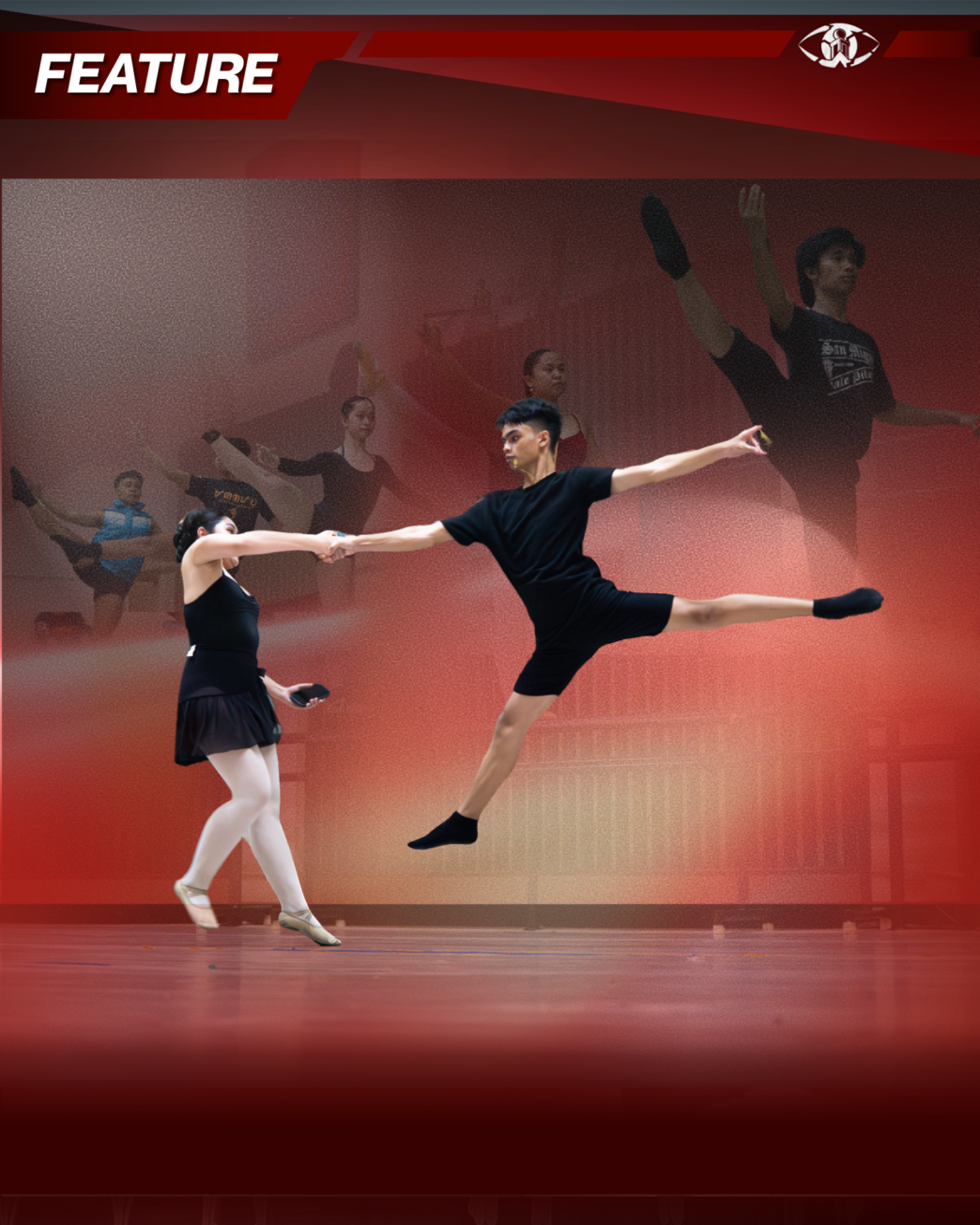
Inside the studio, rehearsals begin at the ballet barre, where warm-up exercises unfold to steady counts. “Extend… close,” comes the cue before dancers move to the center floor in small groups, gliding through chassés, arabesques, and turns. The rest of the company watches from the side, studying each adjustment before stepping into the same combination. The music starts again, and the sequence begins once more. Behind the precision of these movements are the individual journeys of dancers who entered the company with different levels of experience.
Senior member Ken Ilagan, who joined the company in 2023 without formal training in ballet and contemporary dance, recalled, “Back when I was a trainee, it was very overwhelming for me because I didn’t really have any foundation in dance, specifically ballet or contemporary.”
“I felt like maybe my progress is slow, [how] maybe I couldn’t keep up with other members, but eventually, I realized I need to show up every day so I can improve my craft,” he said.
That mindset followed Ilagan beyond his first days in the company and into major productions. He pointed to “Silliman Performs”, the university’s annual showcase of student artists, as one production that tested the company’s willingness to keep working through uncertainty.
In one segment, the company experimented with shadow dance to tell the story of Horace Silliman. Unlike SUDC’s usual repertoire, the piece relied on silhouettes created through precise formations and carefully timed transitions, making the creative process largely one of trial and error.
“We experimented a lot until we had a final performance. It was basically a trial-and-error process,” he said.
Every silhouette depended on strength, balance, and exact body positioning. The dancers also wore tight-fitting clothing and swimming caps to keep their outlines clean against the screen, making physical conditioning just as important as learning the choreography.
“It is a lot of conditioning so that we could dance better, so our lines are clear to the audience,” Ilagan said.
Preparing for productions also meant meeting expectations beyond technique. Members were expected to show up on time, support one another, and carry themselves with respect inside the studio.
“Aside from showing up, I believe that attitude also plays a crucial role because talent and skill can make you go in or be part of the family, but your attitude really matters, specifically showing up on time and your behavior towards other people,” he said.
Freshman student and SUDC newcomer Ezra Nathaniel Larissa met those expectations almost as soon as he entered the studio, where senior members helped newer dancers find their footing.
“Though the pressure is real, they remind us that it is part of learning and part of growing into this new dance style,” Larissa said.
Coming from a street dance background, Larissa had to adjust to technical choreography and faster transitions.
“In street dance, I moved freely. In SUDC, everything is technical. You need to be sharp physically and mentally because everything happens fast,” Larissa said.
Learning the choreography was only part of Larissa’s adjustment. Rehearsals also introduced him to a culture where experienced dancers guided newcomers, knowing they would one day do the same for those who followed.
Vice-President Lekeisha Ybañez said that sense of responsibility is never formally assigned. It grows through shared rehearsals, quiet corrections, and the trust built from spending hours in the studio together.
That culture does not stop at the studio doors. Every production invites audiences into the work members have built together, while each new season introduces another group of dancers to the same tradition of mentorship and shared responsibility. In that way, the company continues to build connections not only among its members but also with the community that gathers to watch them.
“What makes the Silliman University Dance Company truly special is that while we constantly strive for artistic excellence, we never lose sight of our humanity. We challenge each other to become better dancers, but more importantly, better individuals,” Ybañez said.
For Ybañez, those relationships become the company’s most enduring work.
“Long after the applause fades, what remains is the friendships, the shared experiences, and the sense of belonging,” she said.
The faces inside the studio change over time, but the work begins the same way for every generation. Each dancer inherits the same discipline, guidance, and sense of responsibility that earlier members once received.
A curtain call closes a performance, but it does not close the work behind it. As one group leaves, another steps into the same studio and begins learning from those who came before. That passing of knowledge and experience, repeated over time, is what allows the SUDC to continue long after every final bow.