by Joann Kimberly Zerna
The faces in fading photographs no longer walk the campus paths they once crossed. The names printed beneath them are no longer spoken in classrooms or called across the University grounds. But their presence at Silliman has not vanished—it survives in the records that refused to let memory disappear.
The records that preserve these lives are housed in the Sillimaniana and Archives on the third floor of the Silliman University (SU) Library. It was established in 1994 during the administration of the University’s tenth president, Mervyn Misajon, the repository gathers Silliman’s documentary heritage in one collection.
Its holdings range from programs once marked graduation ceremonies, Portal yearbooks, unpublished manuscripts, University records, portraits of University presidents, awards, and photographs that captured the work and life of the institution. Created for daily academic, administrative, and campus life, these materials now allow later generations to trace how Silliman developed through the years.
What fills the shelves is not simply the result of time passing. It is the result of careful judgment. Every document, photograph, and publication preserved in the collection reflects a decision that it may one day matter beyond the moment that produced it.
Sillimaniana and Archives Librarian Elvisa Nario explained that materials accepted into the collection are evaluated based on what they represent today and what they may reveal in the future.
“Materials are generally selected for the Sillimaniana Archives Collection based on their historical, cultural, educational, and research value. Librarians evaluate whether these materials are unique, rare, or difficult to replace,” she said.
Once an item becomes part of the collection, the work shifts to ensure it can still be used by future generations. Depending on the material, that may also include digitization to help preserve fragile originals.
Few of the materials preserved in the collection were created with history in mind. They were shaped by the needs of their time, serving the needs of a particular event, office, or publication. Only after those moments passed did they acquire another purpose, allowing those who came after to understand the institution through the evidence it left behind.
Nario said that a record gains historical significance when it reveals information beyond its original purpose. A document may begin as a routine record of the present, but with time it becomes evidence of a larger story, preserving details that would otherwise be lost.
“A memo, photograph, program, minutes of meeting, or student publication may have been created for everyday use, but it becomes historically significant if it documents a major event, provides evidence of important decisions, policies, or becomes the only surviving record of a significant event or activity,” she said.
Its full meaning emerges when read alongside other records. A single document may capture only one moment, but it gains greater meaning within the collection. Read alongside one another, the records allow moments separated by decades to meet on the same page.
Dr. Earl Jude Paul Cleope, faculty member of the History and Political Science Department, said this is what makes the archive essential.
“It’s where you can see the copies of the Silliman Truth, the Portal yearbooks, and, of course, the old photographs of the Silliman Collection,” he said.
Because the collection spans more than a century, it offers continuity. Materials created decades apart can be read alongside one another, allowing moments once separated by time to speak to each other.
Among the materials in the collection, Cleope points to the pre-war photographs as some of its most revealing holdings. They invite viewers to compare familiar spaces with how they once appeared.
“Pictures taken before the war—it really means a lot. As Silliman celebrates its 125th this August, it would be nice to take a look at how the structures looked before and then how it looks now,” he said.
Photographs allow places to outlive the years that changed them. They allow researchers to examine campus spaces that have changed and recognize details from periods that no longer exist in the same form.
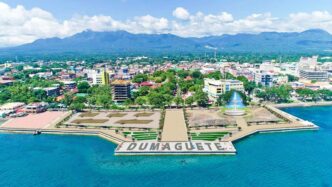
While much of the collection preserves the University’s past, its future continues to take shape. Efforts are now focused on making its holdings more accessible, allowing them to support not only the study of Silliman but also broader research connected to the University’s place in the life of Dumaguete and beyond.
“We are now on the verge of launching the Institutional Repository this August, which will allow more ease of access to our vast collection of not only Sillimaniana material but also to various research-worthy materials and resources across the campus,” Nario said. “This will enhance the research support and experience of our patrons as well as the preservation of these valuable resources.”
Greater access broadens the collection’s role beyond preservation. As more materials become available for research, they offer a fuller account of how the University has evolved through its publications, records, photographs, and institutional life.
For Cleope, these materials matter not only for what they record, but for what they reveal together across time.
“If Silliman is consistent with what was the main goal of establishing this school,” he said.
That continuity depends on records created while events are taking place. Before materials are cataloged, archived, or digitized, they begin as reports, photographs, minutes, publications, and other records produced in the course of everyday university life.
“Just capture it as is. Without subjectivity, without bias. Capture all these events as is,” Cleope said. “Let the historian interpret it the way they are going to interpret it.”
That responsibility begins long before a record reaches the Sillimaniana Collection. Every article, photograph, meeting minutes, event program, and university publication first serves the present before it acquires another purpose. Over time, these records accumulate into more than isolated accounts of campus life—they become the evidence through which the University’s story can be understood in full.
The collection therefore offers students more than access to historical materials. It also reminds them that the records they create today may one day stand beside those they now study, preserving not only what happened, but the life of the University as it was lived.
That appreciation carries an unexpected realization: the generations preserved throughout the collection once experienced Silliman as today’s students do—attending classes, joining organizations, publishing campus work, and moving through the same grounds. Time transformed those ordinary years into part of the University’s history.
The future will never experience today’s Silliman firsthand. It will come to know it through the records left behind, where ordinary moments endure long after the people who lived them have gone.
By then, the ordinary will have become extraordinary. The pages will no longer be reminders of a single day, but the evidence of an era that could only be understood after it had passed.