
by Joann Kimberly Zerna
For 125 years, Silliman University has given artists a place to perform, create, and pass their craft from one generation to another. During this year’s Founders’ Week, that tradition took the stage once again.
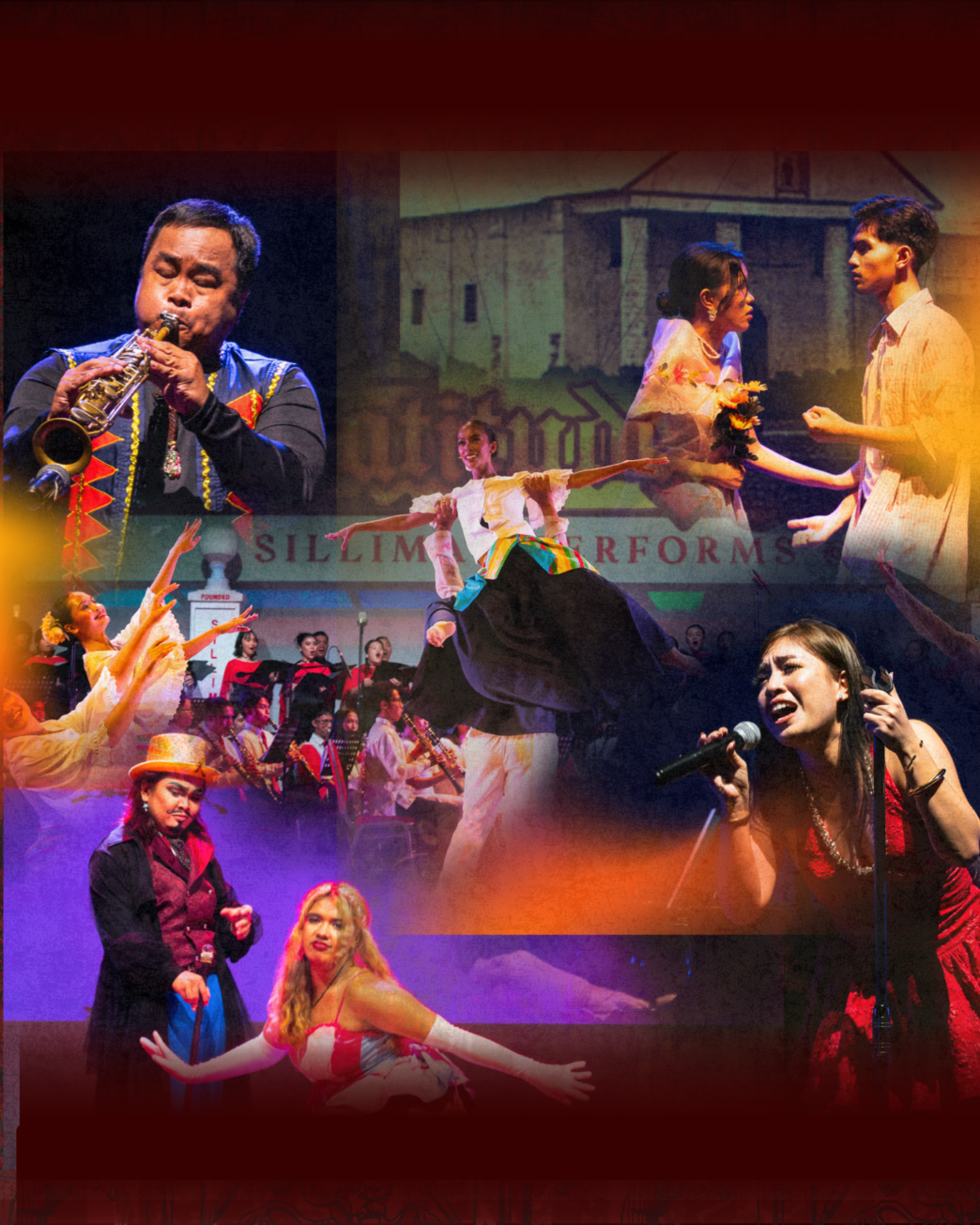
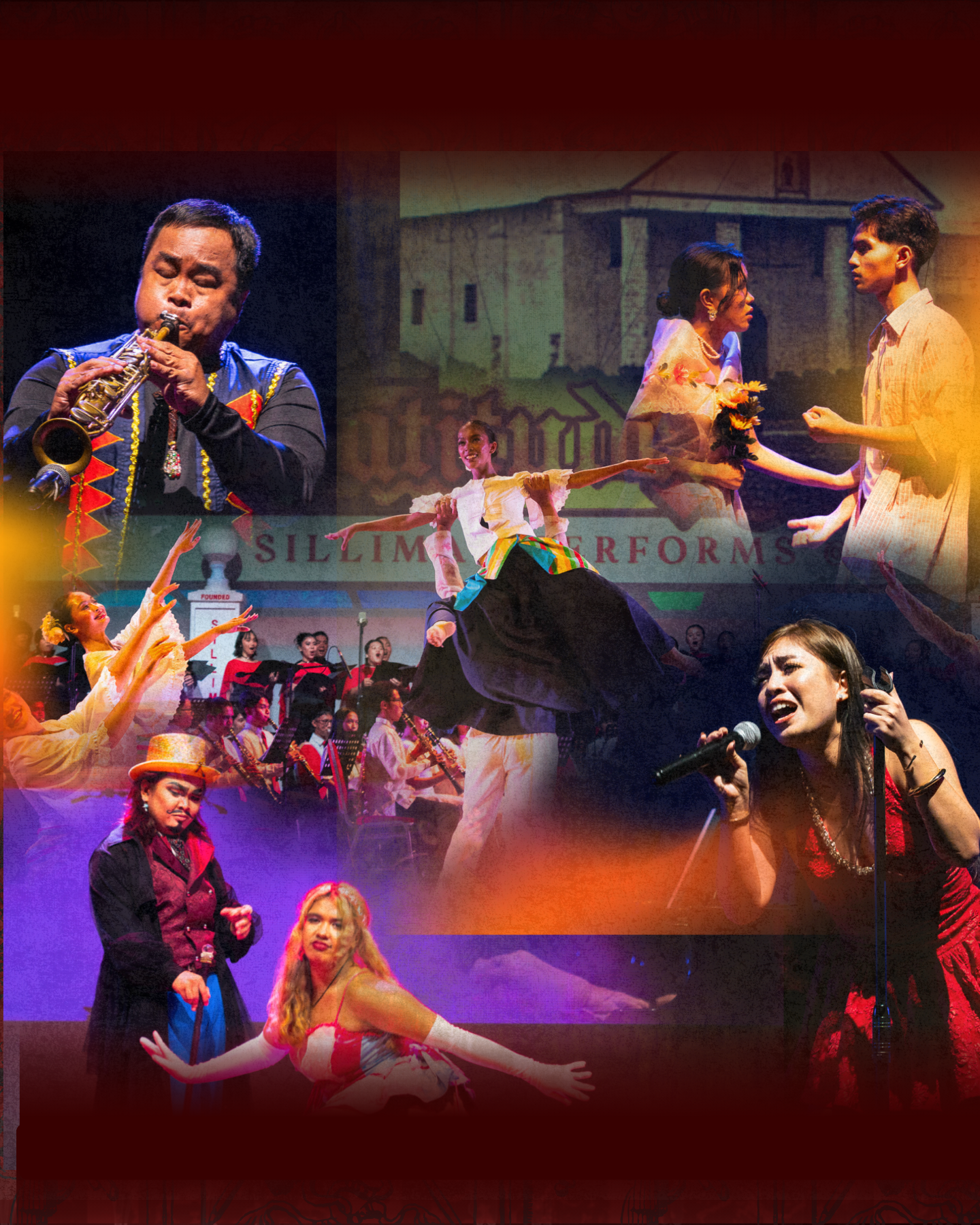
Silliman Performs: Gratitude & Hope brought together current students, resident performing groups, alumni, and artists at the Claire Isabel McGill Luce Auditorium. The showcase became a homecoming for performers whose artistic journeys began at Silliman, while giving younger artists a chance to stand on the same stage.
The stage became a meeting place between what Silliman’s artistic community was and what it continues to become. The Silliman University (SU) Concert Band, SU Dance Company (SUDC), Campus Choristers, Women’s Ensemble, Men’s Glee Club, Orkestra Sin Arco, and Artista Sillimaniana came together under the same lights, joined by Youth Advocates Through Theater and Arts (YATTA), John Ray Pagalan, and School of Music and Fine Arts (SMFA) alumni.
Among the performances, Artista Sillimaniana presented an excerpt from “Demigod,” the Palanca-winning play by the late Bobby Flores-Villasis. Set against the Spanish colonial period, the piece follows the struggles of locals facing oppression and hunger amid a revolutionary movement.
Philip Neri, the director and actor who portrayed the legendary General Pantaleon “Leon Kilat” Villegas, shared he knew he had made the right choice when he witnessed the hope and gratitude of the young artists after Silliman Performs.
“I love how it flipped the theme and focused on the perspective of the hero having to carry the burden of the people’s hope and gratitude, and ending it with a powerful prayer—staying true to our Christian roots as Sillimanians,” he expressed.
Neri also shared how the performance differed from the other productions he had experienced as an Artista Sillimaniana, noting that what made it distinct was the new and unique flavor it brought to the stage this year.
“Straight plays are becoming more niche. And what we presented is a perfect representation of where our roots began—in the classic straight plays. I believe that’s what made this performance special to the event,” he said.
It was only during his final monologue as Leon Kilat that reality blurred with the role, as Neri felt the prayer was not only for Leon, but for himself. In that moment, theater became personal—a way to share the character’s hopes and struggles while allowing the audience to find a part of themselves in the story.
“What I wanted to pass on to the next generation, aside from continuing what we’ve inherited, is to have an initiative. To not be afraid of initiating and pushing art to its limit, and if there are no opportunities, have [the] initiative to create one for yourself and for everyone around you,” Neri said.
Silliman Performs director, Angelo Sayson shared that the production was shaped by a desire to give something back to the University, a community he described as a center for culture and the arts in the province.
The core concept of ‘gratitude’ emerged as a theme deeply meaningful to Sillimanians—one that the production hoped to embody onstage and carry beyond the performance.
“During this Founders’ Week, [the] alumni are coming to pay back. And that tells the theme itself: gratitude. And hope, we [are] looking forward [to] what else Silliman can offer. Not only to learners, not only to students, but to the community,” he said.
That return is part of what gives Silliman Performs its character. It keeps the University’s artistic life from belonging only to the students who occupy its stages now, allowing those who have left to remain part of it.
Sayson also highlighted how the theme reflected the team’s desire to give back to Silliman for providing artists with a space to grow, perform, and connect with the community.
“But we were told [that] since we are grateful [to] Silliman for providing us this avenue to grow as artists, to perform, to share with the community, so I think it’s high time to give it back to Silliman,” he explained.
He also connected the theme to the legacy of the late Lucy Jumawan, the first director of the SUDC. With the company’s presence in the celebration, the production became a way of honoring Jumawan’s contribution and expressing gratitude for the space he helped create for generations of Sillimanian artists.
“That’s why Silliman Performs: Gratitude and Hope is a good avenue for us to show how grateful we are, how thankful we are to Lucy Jumawan for being the first director of the Silliman Dance Company”
Seeing generations of Sillimanian artists return to the stage is a testament to how the performing arts continue to live on. Sayson said that even after graduation and moving beyond the University, alumni continue to return for Silliman Performs, keeping their connection to the arts and to Silliman alive.
By acknowledging these alumni artists, the production becomes not only a celebration of the present, but also a recognition of the legacy that keeps the arts alive across generations.
Musical Director Elizabeth Susan Vista-Suarez, meanwhile, saw gratitude as the heart of the evening. For her, talent is not something to be kept, but a gift meant to be shared. Seeing that gift received by others, in turn, becomes its own reason for gratitude—a cycle of giving that gives deeper meaning to the night’s celebration.
“Gratitude is always the key to success. It’s like this—when you are given a talent, it’s not yours. And to be able to share that is a gift. And for people to receive that gift gives you a feeling of gratitude just as you would give somebody something,” she said.
From the movements of a dancer, to an actor breathing life into a character, and the music that fills the auditorium, there is something in every performance that cannot be captured by a photograph. It is found in the sincerity behind every movement, the conviction behind every word, and the heart that chooses to give its talent to others.
For these artists, their gifts are not theirs to keep. They are blessings entrusted to them, meant to be nurtured, shared, and offered back to the community that helped them grow. In every song, every step, and every story,
Silliman Performs at 125 years becomes an act of gratitude—a way of honoring the gifts they have been given and praying that, through those gifts, others may also be blessed.
What remains, then, is not simply the memory of a performance, but a quiet offering of faith, gratitude, and hope that is entrusted to the next generation to carry forward, just as those before them once did.