
by Joann Kimberly Zerna
Somewhere on campus, there are people students know without ever taking their classes. They know them because they have asked them for help, come back with another request, or simply stopped by enough times for a stranger to become familiar.
Their names may not appear on a syllabus, but their faces have become an undeniable part of student life.
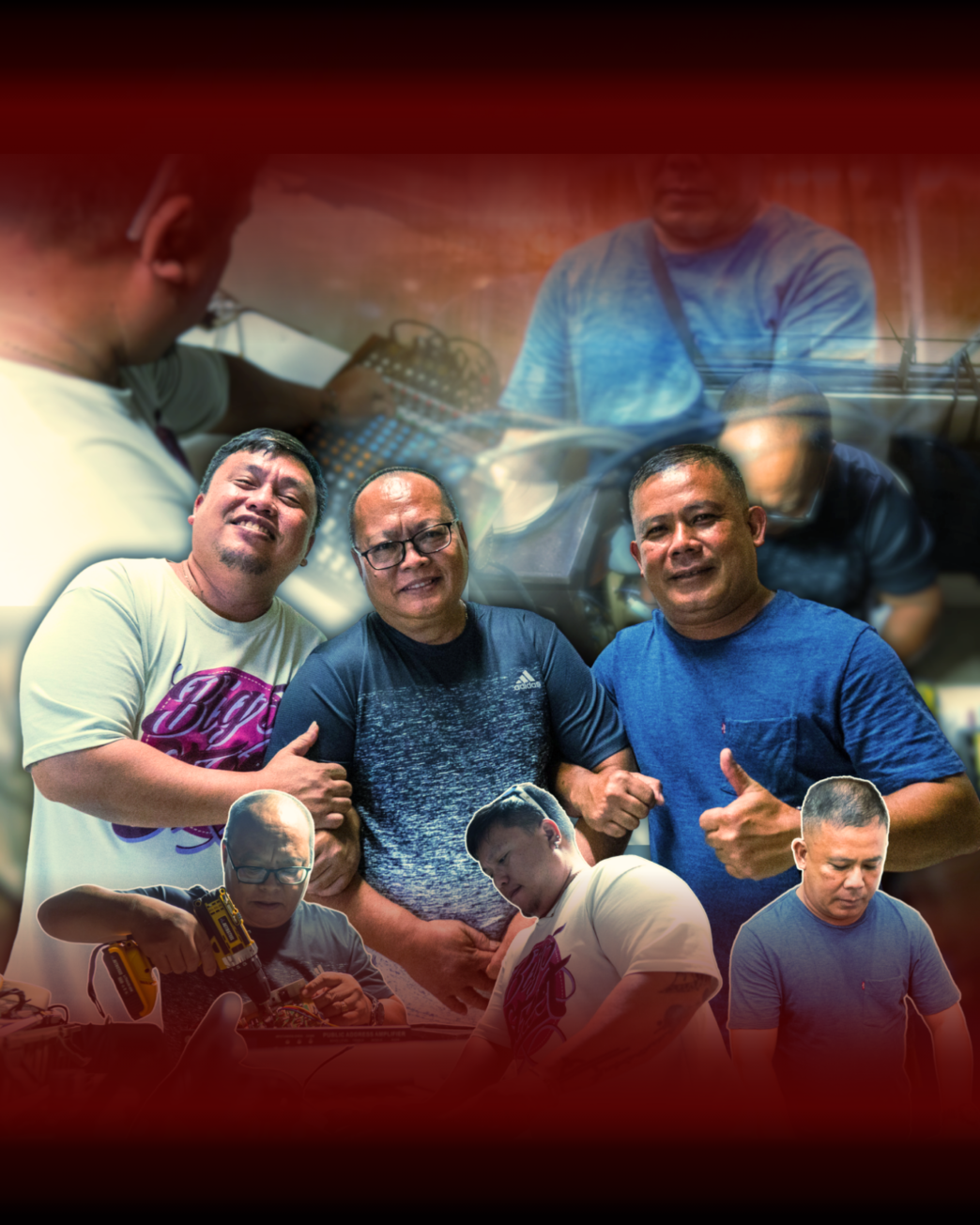
At the Instructional Media and Technology Center (IMTC), that work belongs to staff members students know by more than their job titles. Across the counter, they are greeted as kuya, boss, bossing, kuys, and sir —names that have become familiar through years of knowing the students they serve.
For Ranilo Balcobero, known to generations of Sillimanians as Kuya Boy, that familiarity spans nearly 36 years. Having joined Silliman University in 1990, he has remained a constant presence behind the scenes of campus events.
One encounter from the 1990s remains with him. While operating AVT 1 for a class showcase, he helped a student whose heel broke just before her performance, using glue he kept for repairing speakers and other equipment.
He did not know her name then, but she returned to thank him and later invited him to her birthday lunch, introduced him to her parents, and gave him a Sony Walkman, a prized possession at the time.
“Wala gyud ko niya gikalimtan,” Balcobero recalled. (She really did not forget me.)
For Balcobero, the memory began with a broken heel. For the staff who followed him into the work, the bond with students has been built through smaller moments that rarely appear on an event program.
That spirit of patient mentorship continues through staff like Randel Divinagracia, who has watched student generations pass through the IMTC doors since 2003. Having spent nearly 12 years as an agency operator before joining the regular staff, Divinagracia often handles the frontlines of student requests.
He pays special attention to first-time student officers, who often arrive wide-eyed and overwhelmed by campus bureaucracy.
“We can also teach them how to process the request. Kay bag-o pa man sila, especially kanang mga officers, so at least tudluan nato sila unsaon pag-process,” he said.
(We can also teach them how to process the request. They are still new, especially those who are officers, so we can teach them how to process it.)
His patience comes from understanding what students carry outside the request itself. Divinagracia knows the pressure of deadlines and responsibilities because he once experienced student life himself.
“Para pud dili sila ma stress, kabalo baya kag estudyante, kaagi baya ta ana pud,” he said.
(So they will not be stressed. You know what it is like to be a student; we have gone through that too.)
The same sense of closeness appears in the way Gerry Mascardo treats the students who come to the IMTC. Having served Silliman since 1995, Mascardo has seen students move from first-time requests to familiar faces who greet him around campus. Some eventually become comfortable enough to “mangamin,” a gesture he sees as part of the respect built between students and staff.
“Mao lagi kaning uban mangamin man, that’s the way of respect pud siguro diri sa amo. So kami pud, amo pud silang ulian in good respect pud,” he said. (Some students even become familiar enough to confide in us, and perhaps that is their way of showing respect. So we also return that respect to them.)
Whether accommodating last-minute equipment changes or staying past midnight to support student programs, Mascardo ensures students feel supported as equals, building a genuine barkadahay bond that lasts long after graduation.
The profound impact of that open-door attitude is clearest from the student perspective. Vin Trixter Gunot, Governor of the College of Computer Studies and former member of the 35th SUSG Student Assembly Logistics Committee, has lost count of the times the IMTC team saved his events.
During the Student Assembly sessions, even Sundays became workdays for the staff. Gunot remembers them setting up the Multi-Purpose Room, staying through delayed schedules and waiting until the sessions were finished.
“Even on a weekend, the staff would show up to set up the MPR. They stayed and waited patiently and never once complained, even when our sessions ran way past schedule,” he said.
He remembers that same patience when he was still learning how to process requisitions. The staff guided him through the requirements and followed up when something was incomplete. More than the assistance itself, Gunot remembers how comfortable they made it to ask.
When the crowd disperses and the lights dim, the gear is carefully packed away, and the room returns to silence.
Yet before long, another anxious student will walk through those same doors carrying a fresh request, a tight deadline, or a technical problem they do not know how to solve.
They will be met not by rigid bureaucracy, but by a friendly, familiar face behind the counter, ready to listen and help.
The soundboards and extension cords may be what bring students to the IMTC, but in an office wired for media and technology, it is this deep human connection, this quiet, unspoken barkadahay—that keeps generations of Sillimanians coming back.