
by Gared Arthur
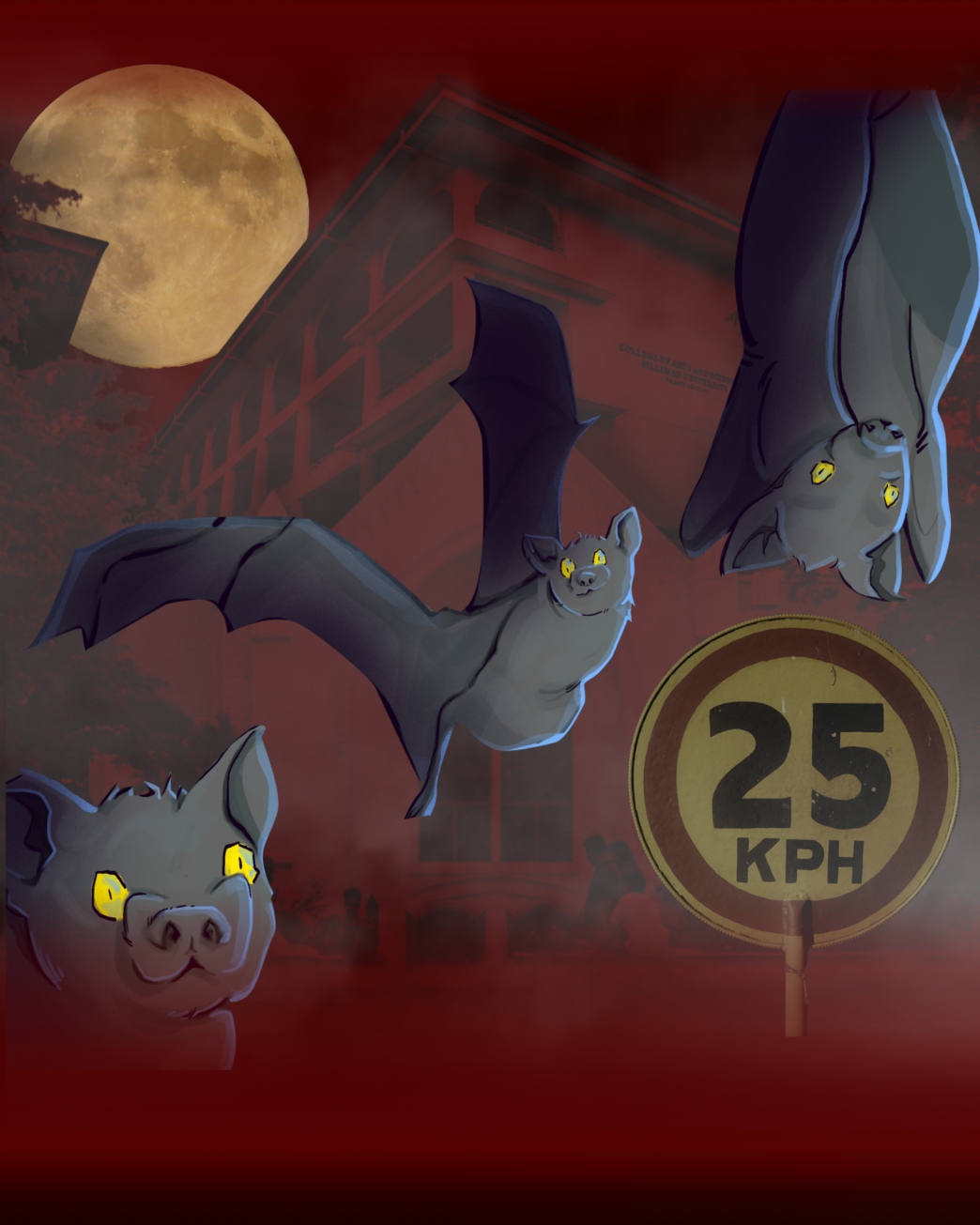
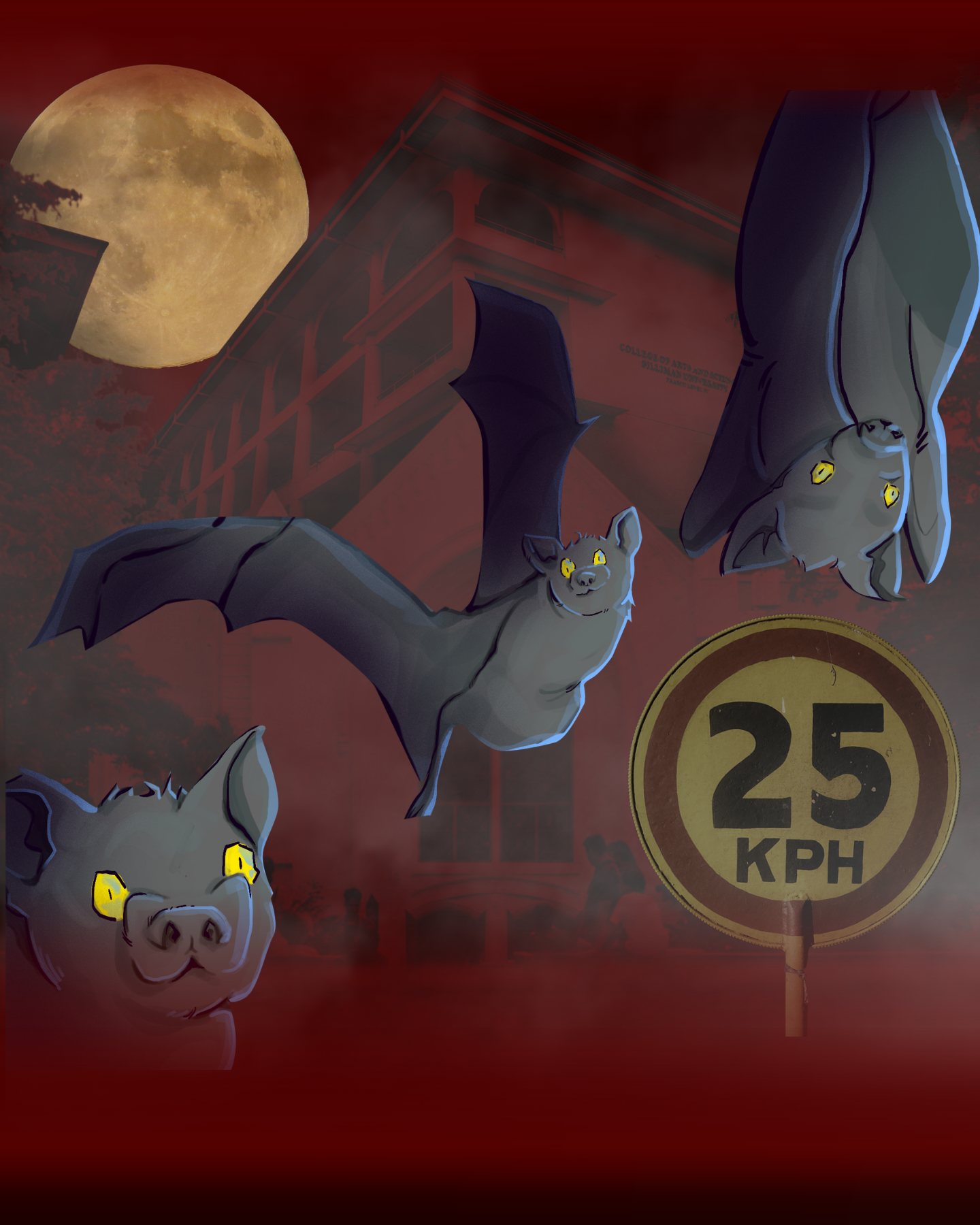
Above the students and beneath the roof of the Silliman University Library, a colony of bats waits silently for nightfall. Then, as the campus dims, they take flight—leaving behind a lingering smell, scattered droppings, and a presence that most pass beneath without a second glance.
For those who work and study nearby, however, their presence is far from invisible. The colony has become part of the everyday landscape between the library and Emilio T. Yap Hall, an encounter that can be unpleasant, particularly when droppings land on the pavement or the shoes of those passing below.
To many, that is where the story ends: bats as a nuisance. But to science, that is only where another story begins; one that has yet to be heard.
Beyond the smell and the droppings lies a role rarely seen from the ground. Bats are among the most ecologically diverse mammals on Earth. Depending on the species, they can pollinate plants, disperse seeds, and reduce the abundance of insects and other arthropods by preying on them, helping regulate their populations within ecosystems. A study published in the Philippine Journal of Science identifies these as important ecosystem services provided by bats, highlighting their contribution to processes that sustain forests and other ecosystems.
Negros itself carries part of that story. A study published in the Silliman Journal documented 12 species of fruit bats on the island, including observations at Silliman University’s A.Y. Reyes Zoological and Botanical Garden. The researchers noted that the data gathered were used to develop a community-based conservation education program aimed at “increasing awareness of the importance of bats in the ecosystem.” It is evidence of a bat diversity thriving not somewhere beyond, but within the region Silliman calls home.
Yet there is an important distinction between knowing what bats can do and knowing what these bats do. The species occupying the library’s roof has not been formally identified in any publicly available study. Without that identification, assigning a specific ecological function to the colony would be speculation.
That uncertainty makes the bats more interesting. Because before Silliman can understand what these animals contribute, it must first understand what animals are actually living above its students.
That is particularly relevant in a country with remarkable bat diversity. Historical data on Philippine chiropteran diversity noted that 15 out of 25 known fruit bat species in the country were endemic. The same research documented habitat destruction and other pressures contributing to declining bat populations.
Against that backdrop, a colony living above a university library becomes more than an inconvenience. In 2019, the university declared its campus a wildlife sanctuary, extending protections beyond its earlier designation as a bird sanctuary. A university biodiversity assessment recorded 32 mammal species, along with 62 bird species and 27 reptile and amphibian species. The assessment also identified trees as important habitat and food sources for campus wildlife.
The bats, however, occupy a more complicated corner of that sanctuary. Their roost is not tucked away in a forested edge of campus, but above a building where people pass every day. Here, conservation meets the realities of sharing space—where wildlife is worth protecting, but human comfort cannot simply be overlooked.
That tension is not merely theoretical for those who work beside the colony. As dean of the college nearest to the roost, College of Mass Communication Dean Irma Faith Pal saw both sides of that contradiction.
“I’m sure we derive some benefits from the existence of bats in our surroundings on campus,” Pal said. But she did not dismiss the inconvenience.
Dr. Pal acknowledged that while the bats have ecological value, their presence also created practical challenges for the Mass Communication community. The stench of bat urine and bat droppings that sometimes stick to students’ and faculty members’ shoes can be a source of daily discomfort.
Circulation librarian Herminia Lazalita described the practical concerns regarding the bats. “Daghan jud na sila, tas baho [There are a lot of them, and it smells bad],” she said.
Her words capture the side of the colony that is easiest to understand—the side experienced through the senses, day after day. But that is only one side of their presence. The bats can be troublesome residents and still belong to a group of animals with significant ecological importance. Recognizing one does not require denying the other.
The question, then, is not which side is right, but how Silliman chooses to live with both. Removing the colony may appear to offer the simplest solution to the immediate inconvenience. But without knowing what species are present, how they use the site, or whether the colony has ecological significance, such a decision would mean acting before understanding.
For Silliman, that process is more than a management strategy. It is an extension of what the university is built to do: to observe, investigate, and understand before deciding.
Perhaps the bats have already made the first choice. They have chosen the roof. And, for reasons still not fully understood, they have chosen to share Silliman with us.
What remains for us is to understand what that choice means. Because beyond the roof, beyond the smell and the droppings, lies a role we cannot see so easily. That is the lesson beneath it all: before we decide what deserves to stay, we should first learn what has been living that flew above our notice all along.