
By Dhel Sue Cabiara and Lealina Evangeline A. Reyes
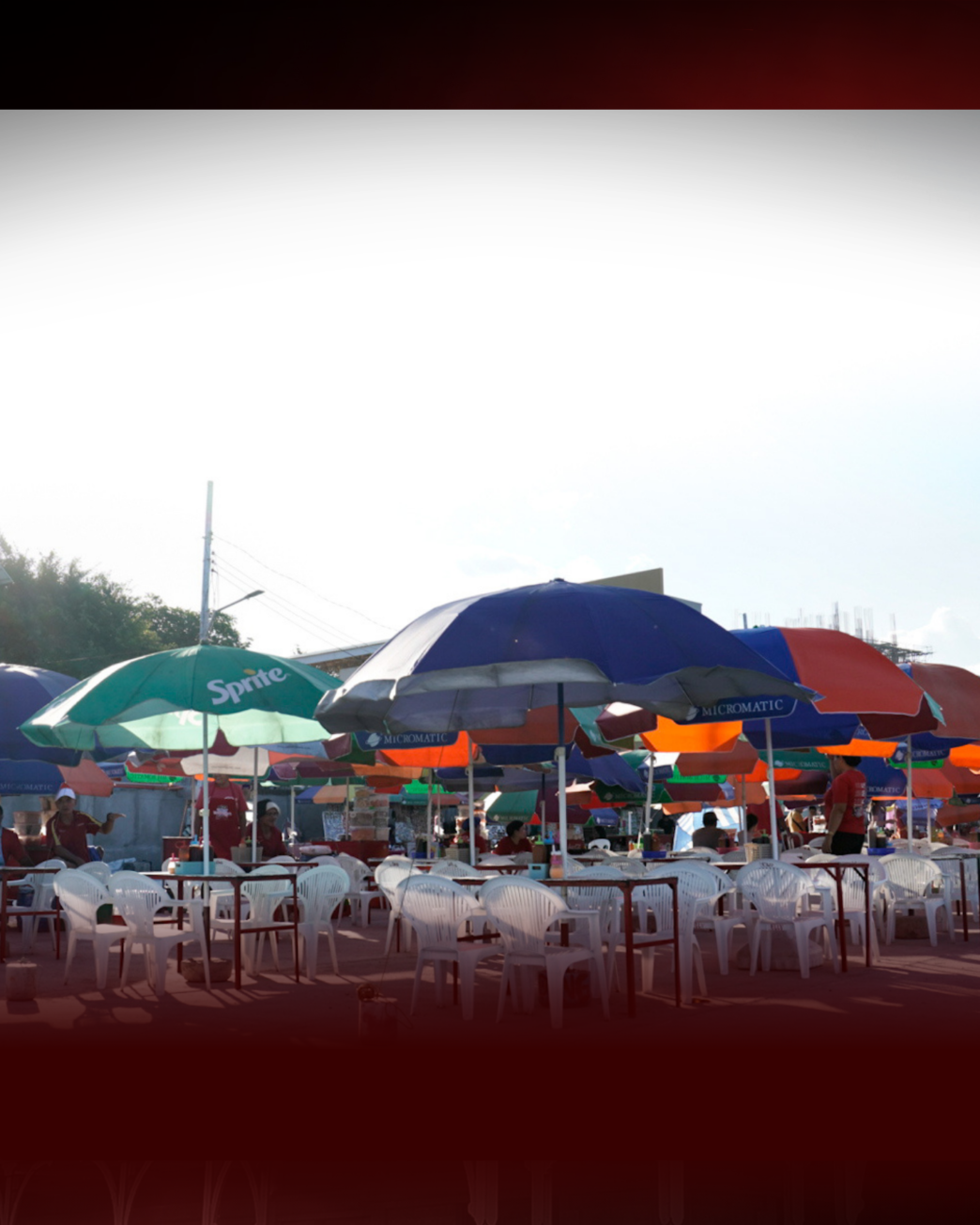
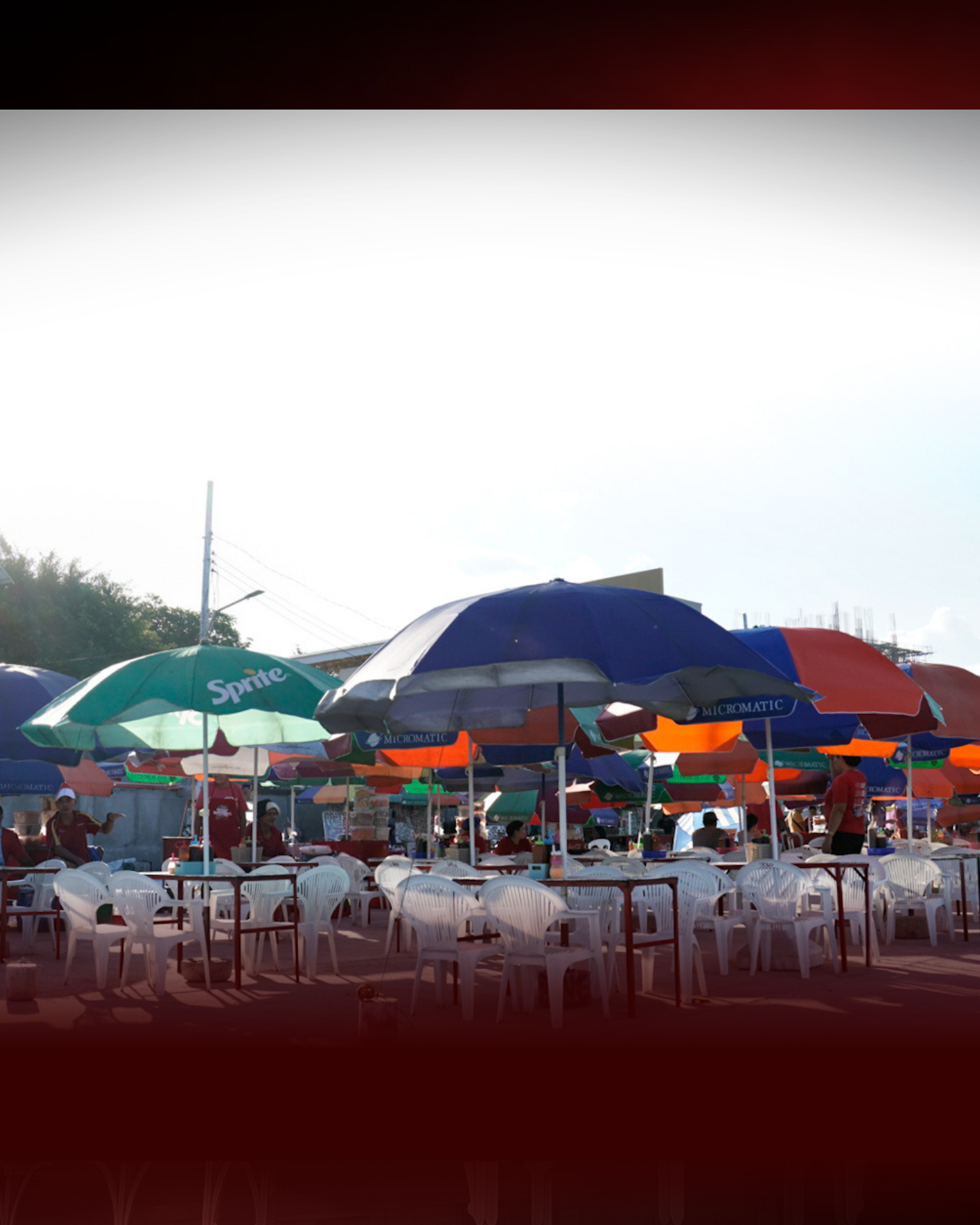
When the clock strikes 3:00 p.m., the pavements of Pantawan Tres bloom with colorful umbrellas. For years, the familiar sight of Tempurahan vendors have drawn locals and tourists to a taste of Dumaguete’s street food. That comfort and familiarity is now missing from its staple space when the city implemented its relocation.
On Tuesday, July 20, all Tempurahan stalls were cleared from Pantawan Tres and transferred to a new, far area under the city’s mandate. Food carts were wheeled to the edge of Pantawan Dos where these small vendors now sell beside big Inasal tents and milk tea and coffee stalls.
Daisy Villamil, a pioneering tempurahan vendors of 36 years, said they were informed about the relocation on the day of the transfer and had to immediately vacate their spot. This sudden relocation led them to start selling three hours past their usual schedule.
“Ang among expectation, […] balhinon mi “next week,” […] walay gibutang nga date. Unya naga prepare na mi [sa among tinda] dayon nakita namo sa group chat sa tempura nga sa Pantawan 2 na daw ta mu-display karong hapona. Maong hakot mi tanan.”
(We were expecting to be transferred “next week,” but they didn’t give us a date. We were already preparing our stalls when we read a message from the group chat that that afternoon, we will start selling at Pantawan 2. So we had to transport everything.)
Meanwhile, Bernie and Flordeliza Argote, a couple from the Dumaguete Balut Vendors Association shared that they were informed about the changes a month in advance. They said, however, this was not enough time to adjust to such a drastic change.
On the day of their exodus, the vendors’ earnings dropped sharply, amounting to less than half of their expected profit.
“Unang balhin nako diri, P20 ra akong halin,” Flordeliza said.
(When I first moved here, I only earned P20)
For Villamil, the loss was so severe it made her emotional. “First day namo? Nan, hilak. Sa first ug second day namo, lisod kaayo,” she expressed.
(Our first day? Well, it made me cry. Our first and second day were so difficult.)
Almost a week after their move, Bernie said their earnings have not improved significantly. In their old spot by 5:00 p.m., “maka halin na ug mga P300,” (we’re already able to earn about P300). The new area, however, offers little customer traction.
Flordeliza attributed the drop to visibility. Their new space, she said, is tuyuonon—hard to find.
Villamil also expressed the same concern, saying that their stalls benefited from being close to the road.
“Bisag mag-ulan kay naa may halin kay naa man mo take-out kanang daplin sa kalsada. Mao pod nay advantage didto kumpara diri. [Diri], mangita ang mga tao ug asa naman, unya ang ilaha tan-awon is kanang mga payong,” she explained.
(Even when it rained, we still made sales because there are those along the roadside who will order takeouts. That was one advantage we had there compared to here. [Here], people need to find where we are and what they will look for are the umbrellas.)
The vendors must adjust to the physical challenges of their new location, as no nearby trees would secure their umbrellas and its cemented area makes it hard to anchor their carts to the ground.
At the same time, the layout of their stalls pose another problem. Villamil shared that it would be better to adjust the placement of their carts to face the boulevard’s parking area.
“Ilaha mi ipareha diha sa Inasal gani nga table sa atubang. Okay ra nila kay dagko man ilaha—naa man silay tent nga dagko kaayo, ilaha pod nga karatola dagko. Kami ang payong ra mahibal-an sa amo,” she said.
(They want us to be positioned like the Inasal stalls with the tables in front. That works for them because they have large tents and signages. We are only recognized through our umbrellas.)
Although the transfer was mandated by the city, the vendors said that the government did not provide assistance to ease the transition, especially for their physical setup.
“Kani [tables and chairs], gi sponsor sa Coca-Cola ug Nature Spring,” Villamil said. (These tables and chairs were all sponsored by Coca-Cola and Nature Spring.)
Despite the current challenges, the vendors remain hopeful that their business will improve once their new placement will be known to the public. “Mas maayo ug makabalo ang mga tao, makainform […] sa mga social media nga naa na diri ang pagkaonan,” Bernie expressed.
(It would be better if people were informed through social media that this is where the street food stalls are now.)
As the sun sets over Rizal Boulevard, hopes remain carved along the pavements of Pantawan and in every shade of the colorful umbrellas that now cast shade in a new location.