

By Sol Baylosis
The birth of generative artificial intelligence (Gen-AI) has threatened to displace the long-established community of photographers, graphic artists, and visual storytellers at Silliman University (SU).
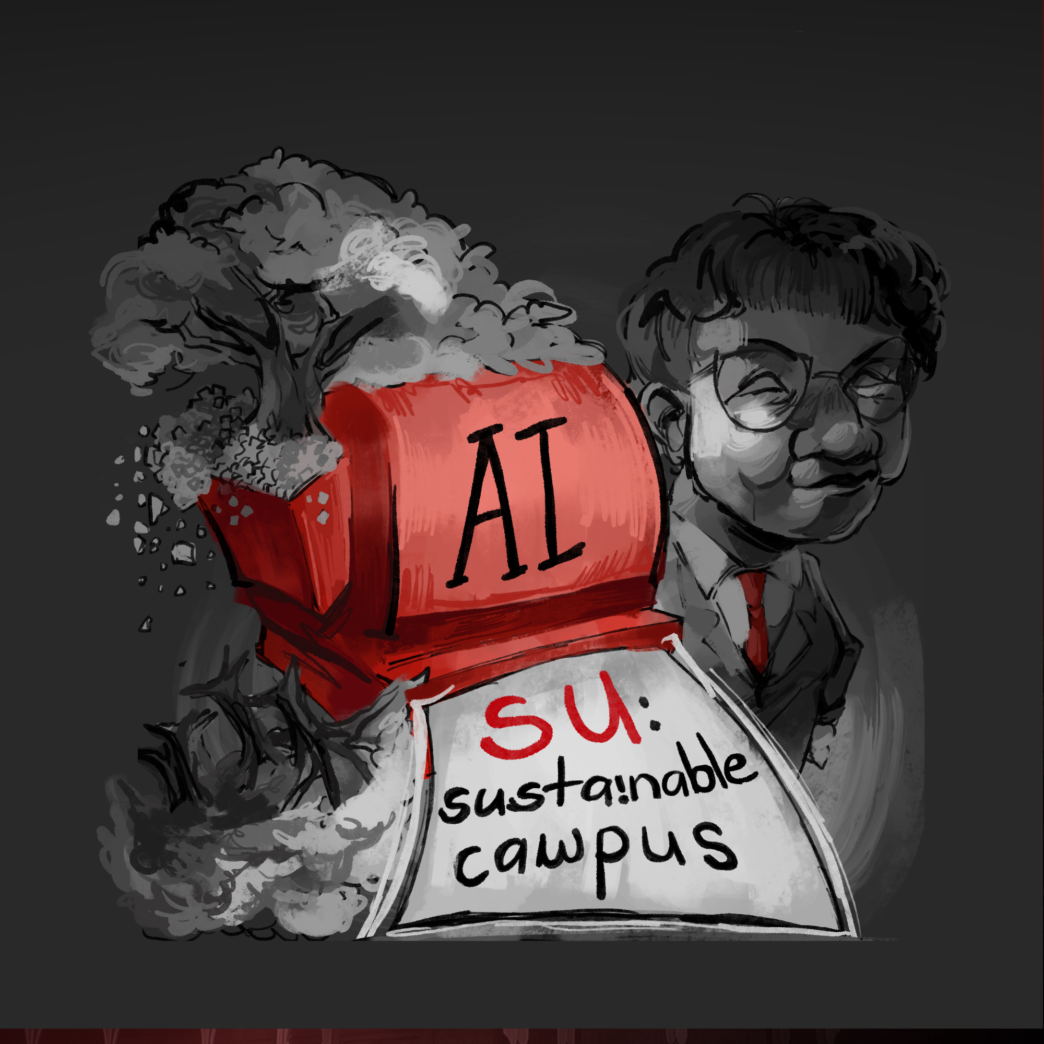
An esteemed university such as SU has made a commitment to environmental sustainability through energy conservation efforts and zero waste principles. Accompanied by its generative AI framework aimed to curb the abuse of AI and ensure “integrity, ethical, and responsible use of technology.” But what happens when these promises are broken?
Whether big or small, each AI-generated image, essay, or graphic material relies on massive data centers which consume large amounts of electricity and millions of liters of freshwater to cool its servers. In the already-worsening climate, water, and food crises both in the country and worldwide, this only places additional strain on our natural resources.
For institutions who say that they champion energy conservation and sustainability, embracing AI without acknowledging these facts can send conflicting messages about its real and irreversible impact.
Discourses on the alleged use of AI during its Founders’ Day Logo Competition recently surfaced online. The announcement of its new Occupational Therapy program in March was similarly met with negative responses after the university used AI for two publication materials. Beyond concerns over quality, these instances of using Gen-AI fueled a growing concern over the lack of care and thinking.
More troubling than the allegations themselves is the apparent lack of accountability that followed. After these claims surfaced, the Silliman University Student Government called on the Office of Media and Public Affairs to address the issue, but received only an email response rather than public acknowledgement. Silence, in this case, speaks volumes. When institutions fail to respond to legitimate concerns from their stakeholders, they risk normalizing the very practices they claim to regulate.
This lack of accountability becomes even more visible when viewed alongside the standards SU has set for itself. It is ironic how the university that champions responsible and ethical use of AI across all facets of learning cannot attach an AI-usage disclaimer to its own work or discern the byproduct of AI from a real, genuine output.
SU has no shortage of talented graphic artists and photographers who could have completed the same jobs with better results, nor in resources to compensate them fairly. Yet, rather than investing in and showcasing the skills it has long nurtured, The university opted for a shortcut that costs them ‘less resources’ but lays a heavier toll on the trust it has built.
This raises questions about how much the university really values its own creative community. A University simply cannot stake its bid of running the oldest creative writing workshop in Asia or be a trailblazer in literary, history, and arts, without realizing that these achievements are the fruits of the creative community’s labor.
The Weekly Sillimanian urges the SU administration not only to uphold its own Gen-AI framework but also, recognize and invest in the creative talents it has spent generations cultivating. The future of innovation at the university should not come at the expense of the artists, photographers, and storytellers who continue to shape its legacy.
A university’s greatest resource will always be its community. If SU expects students to exercise integrity in their use of AI, then the institution must hold itself to the same standard. Otherwise, its policies become nothing more than performative statements, while the creative community it claims to support continues to be sidelined in favor of convenience.