
By AC Putong
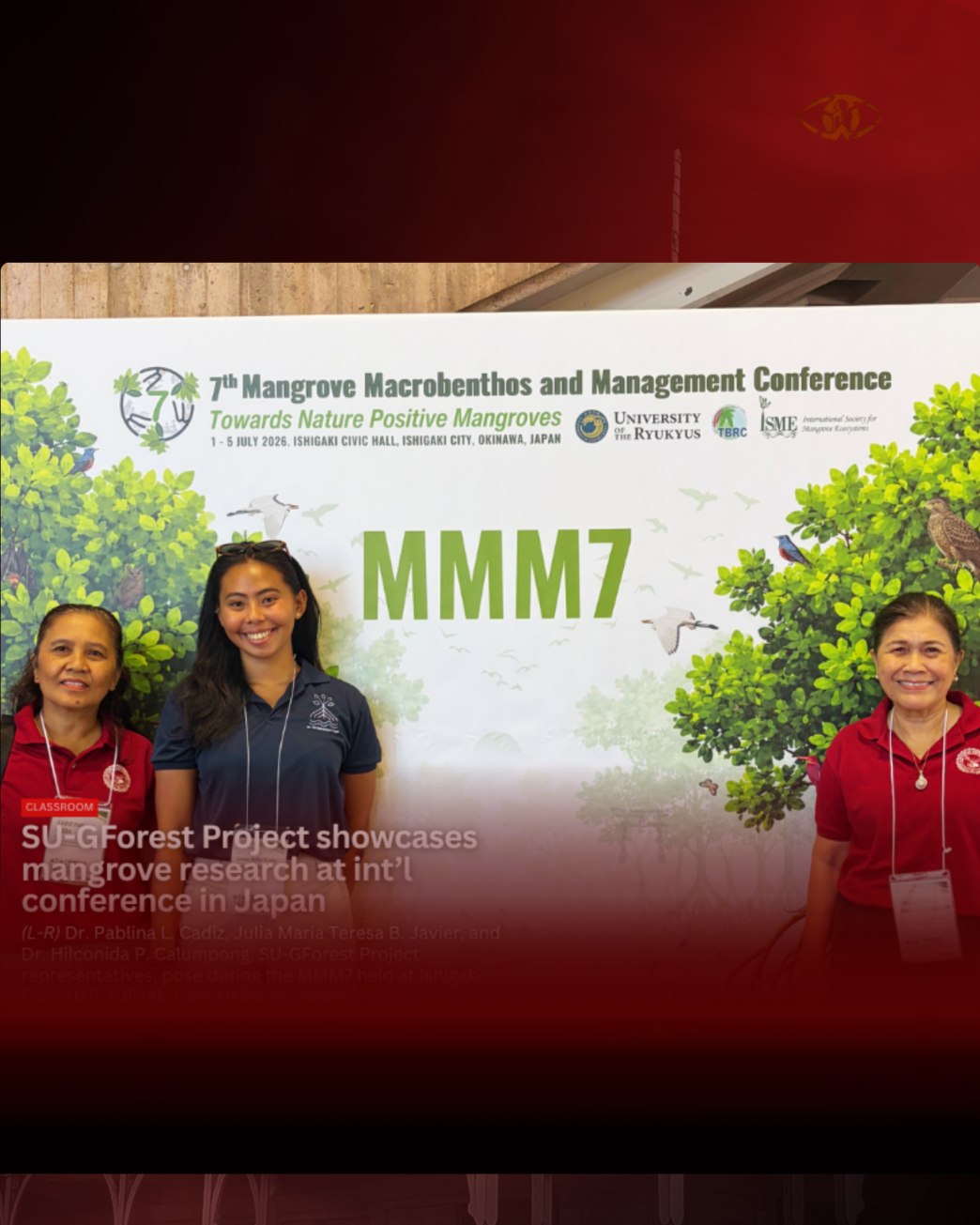
Three researchers from the Silliman University (SU) Institute of Environmental and Marine Sciences (IEMS) showed how mature mangrove plantations and rehabilitated fishponds can store significant amounts of carbon, offering strategies for coastal protection.
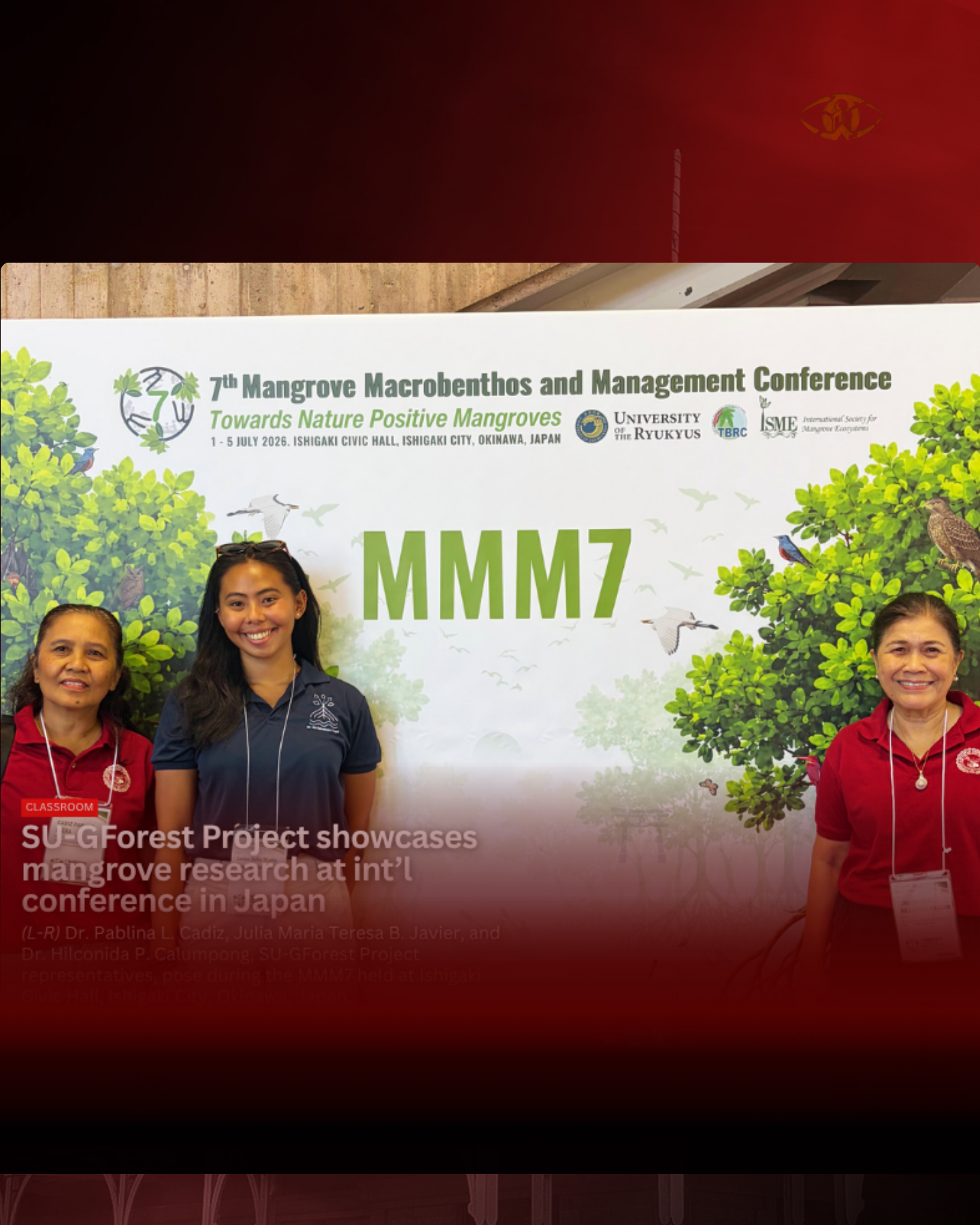
These studies were presented during the 7th Mangroves Macrobenthos and Management Conference, held from July 1 to 5 in Okinawa, Japan, themed “Towards Nature Positive Mangroves.”
IEMS faculty Pablina Cadiz presented a study titled “Carbon Sequestration of Bruguiera sexangula on Ticao Island and Rhizophora stylosa on Negros Island, Philippines,” which found that carbon sequestration increases as both mangrove species mature.
Carbon sequestration refers to the natural process by which plants capture and store atmospheric carbon dioxide.
It was co-authored by IEMS Professor Emeritus Hilconida Calumpong and master of science in marine biology students Dianne Mira Yap, Floramae Neri, and Clint Alvior.
Cadiz and marine biology student Julia Maria Teresa Javier also presented “Estimating Carbon Sequestration of Rhizophora stylosa in Rehabilitated Fishponds in Negros Occidental, Philippines.”
The paper revealed that three-year-old plantations of the species in restored fishponds stored large amounts of carbon and rehabilitated fishponds could become coastal wetlands capable of removing and storing atmospheric carbon.
Meanwhile, Calumpong presented a study on “Increasing Mangrove and Beach Forest Carbon Stock on Negros Island, Philippines through private-private-public partnership.”
The study highlighted the SU-GForest Project, a partnership between SU, GCash, local government units, and community organizations to plant three million trees across Negros Island by 2032.
As of May, the project had planted 348,500 mangrove and beach seedlings of 16 species across municipalities in Negros Island. They recorded an overall seedling survival rate of 82.75%.
The five-day conference served as a global platform for mangrove research and ecosystem conservation and restoration, gathering scientists, researchers, and policymakers.