By Kate Baclia-an and Carla Adeline Via
Calm mornings, waves crashing against the boulevard, and whirring motorcycles. These are the rhythms that have long defined Dumaguete, the “City of Gentle People,” a place where both locals and tourists have fallen in love with its laid-back charm.
But despite its gentleness, Dumaguete is no exemption to the realities of urbanization. Modernization is starting to reshape the city’s identity: multinational franchises and commercial buildings continue to multiply, and daily heavy traffic continues to thicken along its streets.
Local affect
For longtime residents, this economic growth and modernization have produced significant changes in everyday life.
“Sa una, dili pa kaayo heavy ang traffic,” Louie Jay Katada, a Painitan vendor of 26 years, recalled. “Nawala na [ang image] sa Dumaguete as [a relaxing place].”
(Before, the traffic wasn’t that heavy. The image of Dumaguete as a relaxing place has disappeared.)
Local business owners point to competition. Lizza Vivar Perdices, who has managed Café Mamia since 2002, explained how small establishments must adapt to survive against bigger food chains.
“Of course, it affected [us] in a way that we have competition […] They have capitalization, so better equipment, better everything,” she said. “But, you know, you just have to try to improve your food.”
Adaptation has meant taking a more cautious approach. The family decided to scale down their business by reducing operating hours, trimming personnel, and controlling costs.
Beyond the café doors, Dumaguete tells a different story. The small city now hums with the pulse of modernization, and pedicab drivers grapple with the rise of digital ride services.
“Kay daghan naman [digital ride services], kanang mga Grab, mao nang na-minus-minusan mi’g mga pasahero,” explained Abraham Sitjar, a pedicab driver for four decades. “Naa pud nang mga habal-habal [drivers] nga walay [rehistro] pero gapamiyahe man diri.”
(There are many digital ride services nowadays, like Grab, so fewer passengers for us. There are also motorcycle taxi drivers who don’t have registration but still operate here.)
Heritage preservation, urban planning
These frustrations reflect wider concerns about whether local government sectors have a clear long-term vision for managing the city with its unrelenting economic growth.
Former Dumaguete Heritage Council Chairperson Dr. Earl Jude Paul Cleope insisted that urbanization itself is not the problem.
“You cannot stop urbanization,” he said. “At the end of the day, the goal of urbanization really is for the community to improve their way of life.”
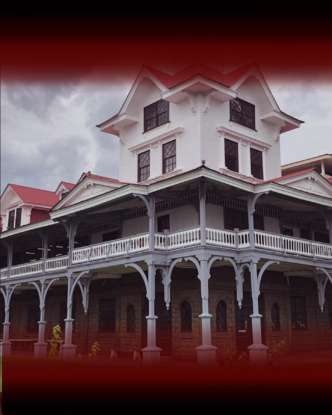
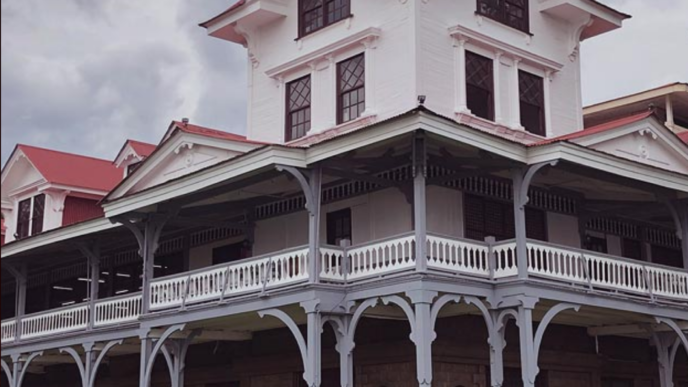
The challenge, he argued, is ensuring that growth is properly planned. He cited other cultural epicenters in the country, such as Vigan and Iloilo City, as “good examples of urban planning and heritage preservation.”
During Cleope’s term as chairperson, the council collaborated with the local government in creating preservation ordinances to guide and set legal parameters surrounding development. But, the city’s direction has become less clear in recent years.
“I really have no idea. Or maybe they have [directions], but it’s not yet articulated or not yet well explained. Especially to stakeholders like us. I mean, have you heard of any plan? Or [is it] just for festivals?” he expressed.
Cleope also said that there are “legally declared heritage zones” in Dumaguete to protect historically significant areas, while allowing commercial development elsewhere. This allegedly encompasses the Pantawan area up to the local Tiangge.
“Now, in the case of Dumaguete, there are supposed to be what we call as designations of commercial zones [and] heritage zones. It includes the integrated Presidencia which you have the National Museum, then you have the park, and then you have the Belfry,” he explained.
However, City Planning and Development Office Coordinator Engr. Emmylou Cornelio said that this heritage zoning is not yet formally integrated into current land use plans.
She agreed that heritage preservation deserves greater attention during planning, but said that there is no officially designated heritage zone as reflected in the city’s official zoning maps.
“Akong nahibal-an kay structures man lang, like kato atuang Bell Tower then kining sa museum. Kung naa gyud specific area nga gi-designate, murag wala ko’y nabantayan sa amuang zoning map,” she explained. “Kay ug dugay na ni siya, dapat na-integrate na ni siya dapat.”
(All I know is that we have protected structures, like the Bell Tower and the museum. If there was a specific area designated, I don’t think I’ve seen it on our zoning map. If this was declared a long time ago, it should’ve already been integrated.)
Environmental implications
Beyond heritage preservation and urban planning, modernization efforts have also brought detrimental implications for the city’s marine ecosystem—an especially concerning issue considering that the city lines the eight-kilometer coast teeming with marine life.
According to the preliminary survey by the Silliman University Institute of Environmental and Marine Sciences (SU-IEMS), the city’s coastline has around 200 species of fish and corals, more than 100 macroinvertebrate species, and seven seagrass species in four marine reserves and their adjacent fished areas.
Asst. Prof. Danielle Mark Fukuda from the SU-IEMS said that Dumaguete is “developing faster than its coastal ecosystems can sustainably accommodate,” especially with the rapid development of coastal roads and commercial establishments.
“Right now, we are seeing the steady expansion of hard coastal roads and incremental proposed reclamation projects. If we keep burying our shorelines under tons of rubble, we will literally smother our four local Marine Protected Areas (MPAs),” he said.
He also explained that irresponsible tourism or overtourism, mismanagement, and the unchecked modernization of the city can lead to several environmental problems like increased pollution and degraded environmental conditions, among several others.
However, Fukuda clarified that tourism itself is not harmful but becomes dangerous when combined with “unchecked development and poor environmental management.”
“Tourism for our marine ecosystems can be managed by knowing its carrying capacity. We must scientifically determine how many visitors these fragile ecosystems can handle and limit access accordingly,” he suggested.
Fukuda added that if local units continue to “recklessly push past determined limits for the sake of profit,” the collapse of marine environments is inevitable.
Therefore, he called for stricter coastal management ordinances, independent environmental impact assessments, improved wastewater systems, and stronger protection for MPAs.
“We immediately need a strictly enforced Coastal Zone Management ordinance. This policy should mandate rigorous, independent environmental impact assessments before any public or private development breaks ground,” he said. “We also need to enforce the protection of the established local MPAs directly along the Dumaguete coastline.”
Though different local sectors have expressed concerns over how modernization would affect the initially quaint city of Dumaguete, they still all shared the same sentiment:
They do not oppose urbanization.
Moving forward
Local architect Ned Carlos reimagined Dumaguete’s “smart streets” with a pedestrian-centric design, introducing bamboo-framed trellises covered in native creeping vines and integrated solar shading. The structures mark how new infrastructure projects are reshaping public spaces, reflecting the broader tension between rapid urban transformation and Dumaguete’s identity as a laid-back city.
“As we build a smarter Dumaguete, we must ensure our streets remain human-centric and breathable,” he wrote ina Facebook post.
Furthermore, Dumaguete City Tourism Office Public Relations Officer II Francis Lomer Lopez looked at these modernization efforts as a positive force.
He explained that the arrival of new commercial establishments expanded the city’s capacity to host visitors while strengthening the local economy.
“These businesses provide essential goods and services that are advantageous not only to visitors but also to local residents,” Lopez said. “The growth of the tourism sector also generates numerous employment opportunities and livelihoods for local people.”
Lopez added that Dumaguete continues to promote its historical landmarks, arts, and literary heritage as part of its identity while expanding tourism opportunities. This comes after its recent United Nations Educational, Scientific, and Cultural Organization City of Literature designation.
In 2025 alone, their office recorded nearly 700,000 tourist arrivals, an 11-percent increase from the previous year. The rise highlights Dumaguete’s growing appeal as a travel destination, and officials expect the upward trend to continue in the foreseeable future.
As Dumaguete stands at the crossroads of heritage and modernization, one thing is certain: urbanization is no longer a distant reality. With multinational companies expanding, infrastructure projects rising, tourism on the rise, and heritage debates still unresolved, the gentle city is headed for a rapid transformation.
In the coming years, Dumaguete will continue to modernize under these pressures, and its identity will be shaped by how the government and residents balance growth with preservation.