
by Joann Kimberly Zerna
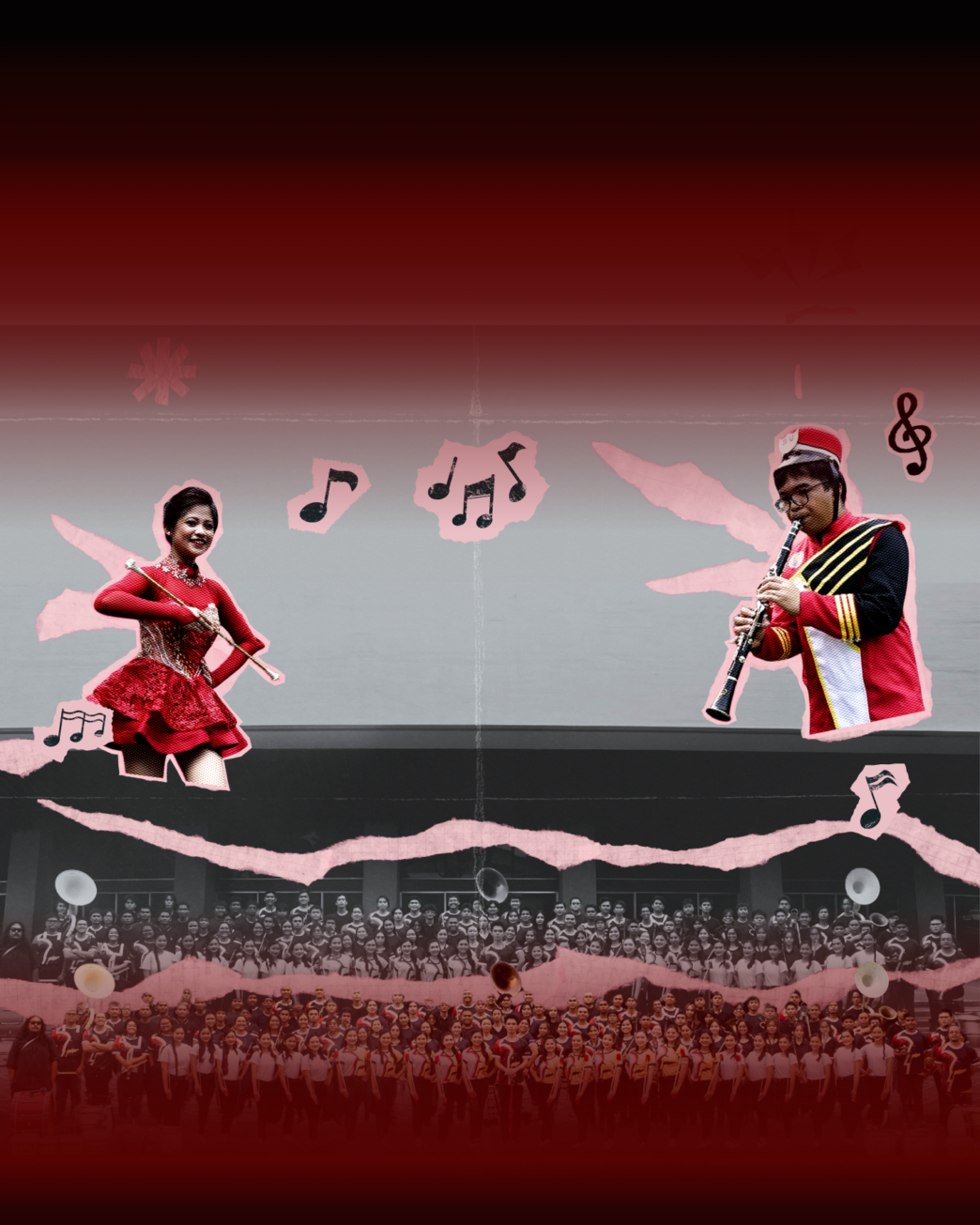
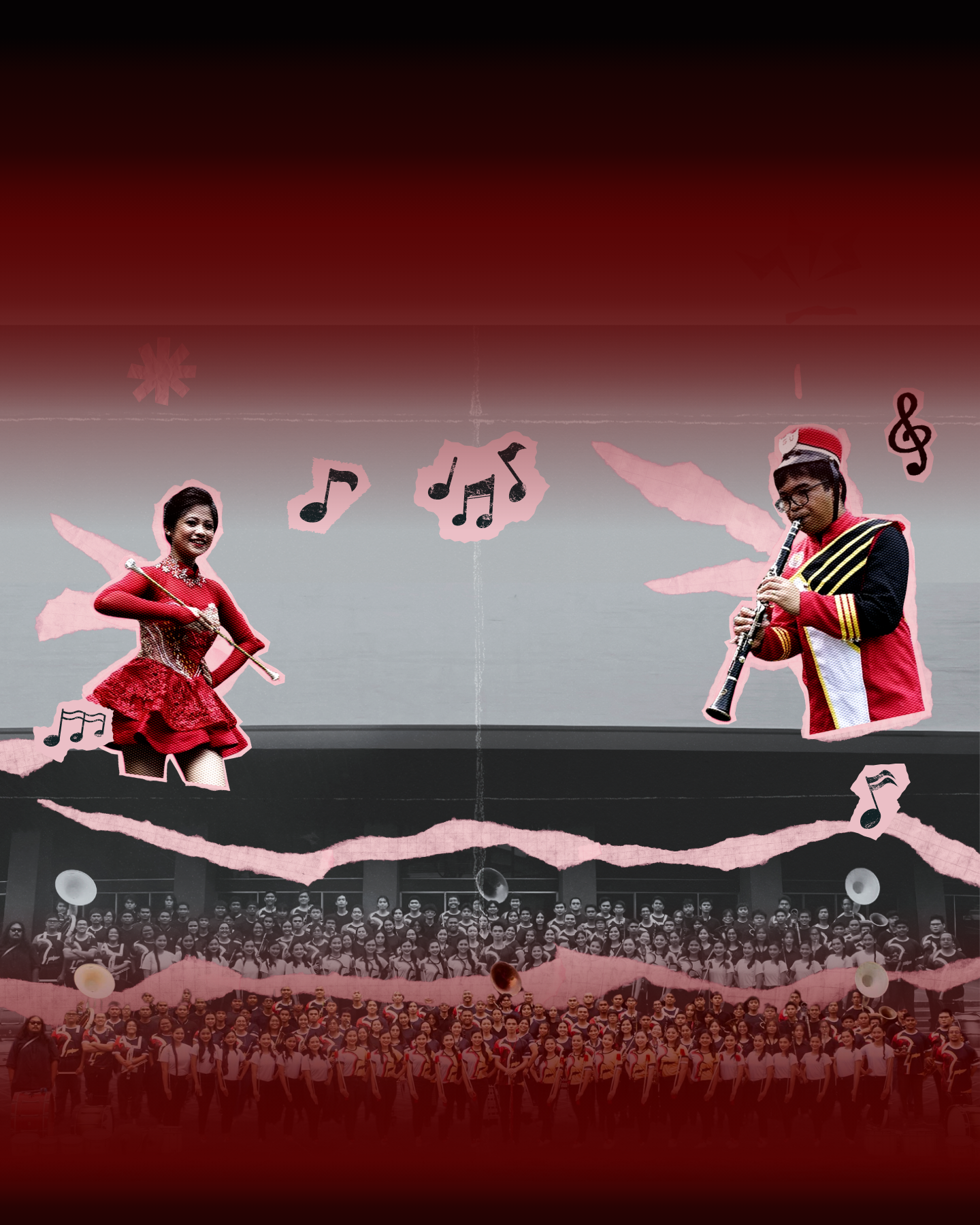
The brass catches the blinding August sunlight long before the first note reaches the crowd. Then comes the percussion, a steady, thunderous pulse felt deep in the chest before it is heard. Rounding the corner in crisp formation, white gloves rising and falling in synchronized motion, the Silliman University (SU) Band makes the spectacle look entirely effortless.
As the official musical ensemble of Silliman University in Dumaguete City, the SU Band is a cornerstone of campus culture with a legacy spanning decades. It serves as the living soundtrack for major institutional rites, civic parades, and academic ceremonies across Negros Oriental.
What thousands of spectators cheer for during Silliman’s annual Founders’ Week in Dumaguete City is merely the final, polished layer of a grueling marathon.
Behind those few minutes of street precision are weeks of relentless rehearsals, squeezed between university lectures, major examinations, and free periods that were never really free. For these student-musicians, the performance is a sacred tradition built on quiet sacrifice, discipline, and passing the torch.
To the rest of the campus, August is a month of heritage, reunions, and celebration. But to Band Director Asst. Prof. Joseph Albert Basa, it is a test of endurance that demands everything from his students.
“Once we’re talking about Founders’ Week or the two-weeks na Founders’, we call it ‘August Rush,'” Basa says. “Because starting August 1, that’s really the time nga double time gyud sa amoang mga pieces.”
The schedule is unforgiving. In a matter of days, the band must soundtrack the Outstanding Sillimanian Awards, the Arrival of Honors, Diana (the traditional pre-dawn march that awakens the campus), and the massive Parada Sillimaniana. Academic deadlines do not pause for rehearsals, and midterm exams offer no exemptions, forcing the band to simply show up and deliver.
First-year French horn player Josh Miro Bayquin showed up not fully realizing what that commitment entailed. During his very first rehearsal, Bayquin watched senior musicians execute complex passages with nonchalant precision, as if the music were etched directly into muscle memory. Every subtle cue from the conductor landed without hesitation.
“The music they played wasn’t just something you could hear; it was something that you could also feel,” Bayquin recalls. “The percussion, especially the beat of the bass drums, was something I felt in my bones.” In that moment, the illusion of ease shattered, revealing the relentless work underneath.
Bayquin realized that individual talent means little inside a marching unit. Excellence demanded hours of solitary practice, private mistakes corrected away from the spotlight, and the discipline of subordinating personal style to the collective sound.
“Unlike performing solo, where you could have your own musical expressions and interpretations, playing in the band requires you to strictly sync with others and the conductor,” he said. “You are expected to be mostly independent and to practice by yourself.”
If rookies learn how to fall in line, section leaders learn what happens when there is no one left to follow.
For clarinet section leader Kyle Calvin Pacaña, that realization arrived abruptly during a routine rehearsal when academic commitments pulled away most senior members. Looking around at the empty chairs, Pacaña felt the sudden shift of generational responsibility.
“From that moment on, I made it a habit to practice diligently during my free time and began helping my fellow band members whenever I could,” Pacaña says. “Looking back, that experience marked the beginning of my growth, not only as a musician but also as a leader.”
The SU Band does not pass down its legacy through handbooks or written guidelines. Instead, it moves organically through people: a senior correcting a junior’s embouchure after a long drill, a section leader staying late in the rehearsal hall, or a graduating batch leaving behind a standard that the next generation must now hold.
“As one of the band’s more experienced members, I believe we carry the important responsibility of guiding and mentoring our newer members, as they will eventually take our place,” Pacaña explains. “This responsibility begins with setting a good example through our attitude, discipline, and behavior.”
It is this unspoken code that Director Basa has guarded for years. Faces change, instruments age, and students graduate, but the boundary of expectations never shifts downward.
“Duha lang gyud akong masulti ana,” Basa reflects. “Among culture and traditions is discipline and class. Mao na among standard. Dili gyud mi mo go down ana nga level sa amoang disiplina.”
When the final note of the Parada Sillimaniana fades into the afternoon heat and the crowd slowly disperses, the musicians adjust their instruments and reform their ranks to march back.
The applause was for a brief moment of public perfection, but for those holding the instruments, the true victory belongs to the unseen hours in the rehearsal hall. As the parade ground clears, the work to earn the next beat has already begun.